

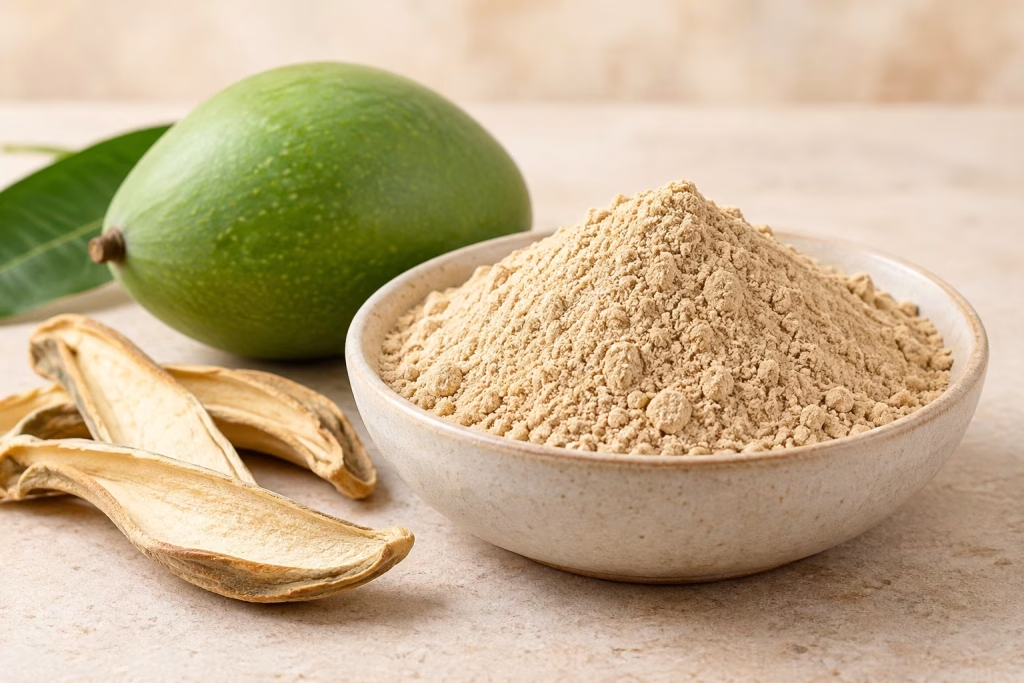


Spray-Drying vs Cold-Dehydration in Botanical Powders: Mango, Amla & Anardana
How heat degradation affects thermolabile Vitamin C, tannins, and bioactive fruit pectins.


A deep comparative analysis between high-heat spray drying (which often requires carrier starches like maltodextrin) and gentle low-temperature vacuum dehydration for 100% pure botanical powders.
1. The Problem with Conventional Maltodextrin Bulking
Many commercial fruit powders on the market contain between 30% to 50% carrier agents—most commonly maltodextrin or corn starch—to facilitate high-throughput commercial spray drying without nozzle clogging.
For European clean-label brands and US dietary supplement manufacturers, these hidden excipients disqualify the product from "100% Pure Fruit" claims and alter nutritional assays.
2. Preserving Natural Ascorbic Acid in Wild Amla
Indian Gooseberry (Amla) is recognized as one of the world’s richest natural sources of Vitamin C, containing up to 20 times the ascorbic acid of citrus fruits. However, Vitamin C is highly thermolabile, degrading rapidly above 60°C.
- Shade-drying and closed-loop cryogenic pulverization preserve over 92% of native bioactive ascorbic acid.
- Emblicanin A & B polyphenols remain intact, providing complex antioxidant buffering unavailable in synthetic ascorbic acid isolate.
- Zero chemical solvents, carrier starches, or anti-caking silicon dioxides are introduced.
3. Packaging in Nitrogen-Flushed Barrier Drums
Because pure fruit powders are naturally hygroscopic, Pranishth Global packs commercial consignments in 20kg or 25kg HDPE fiber drums with dual heat-sealed aluminum foil barrier liners, desiccated under a dry nitrogen headspace.
Contributing Senior Fellow to the Pranishth Global Trade Research Desk. Advises European, US, and Middle Eastern procurement managers on spice chemistry, analytical lab validations, and maritime export standards.
Verify This Specification with an Express Sample Kit
Ask whether a product sample is available and what documents can be supplied for review.
Related Technical Briefings
View All ArticlesCurcuminoid Assay in Export Turmeric: HPLC vs Spectrophotometry Protocols
Why ASTA Method 18.0 (Spectrophotometric) often inflates active curcumin percentage, and how High-Performance Liquid Chromatography (HPLC) prevents costly EU/US port customs rejections.
Navigating Ocean Freight Realities: Mundra & JNPT to Rotterdam & Newark in 2026
A comprehensive operational briefing on managing moisture condensation during extended ocean voyages, selecting direct vs transshipment feeder lanes, and securing guaranteed container equipment.